Academia
Academy
30th July to 6th August 2026
We are delighted to present the sixth edition our ancient music academy. This academy will allow young musicians and singers to deepen and develop their knowledge and practice of historical interpretation. They will be guided by artists renowned for their individual approach, whether in terms of their teaching or their performance style. This approach, the very essence of Les Epopées, is at the heart of the Academy's teaching.

Application
Admission, subject to acceptance by the professors:
- Singers : on CV and recording (you can contact us if you don't have recording)
- Violin and cello : on CV
End of applications:
June 30, 2026
The teaching team
Singing and interpretation class
Claire Lefilliâtre and Stéphane Fuget
Vocal coach class
Stéphane Fuget
Violin class
Odile Édouard
Cello class and conducting of the continuo on the cello
David Simpson
Initiation to Baroque dance
Gudrun Skamletz
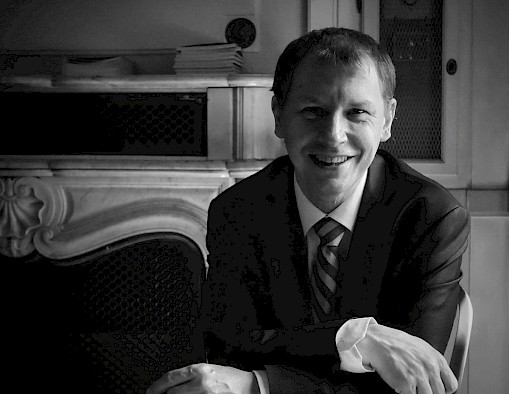
Stéphane Fuget
Stéphane Fuget is a harpsichordist, organist, pianist and conductor. He started his career as a vocal coach alongside C. Rousset, J-C Spinosi and M. Minkowski on major international stages: Staatsoper and Theater an der Wien (Vienna), DNO (Amsterdam), Liceu (Barcelona), La Monnaie (Brusells), Opéra de Paris, Châtelet and Théâtre des Champs Elysées (Paris), Strasbourg, Toulouse and Bordeaux operas. He teaches a vocal voaching class and a baroque opera class at the CRR in Paris, the only of their kind in France. At the conservatoire he has put on many operas, by Monteverdi, Handel, Cavalli, Cesti, Lully, Rossi, Peri, Marais and Grétry. In 2018 he created Les Epopées, a lyrique company, advocating a decidedly new manner of interpretation.
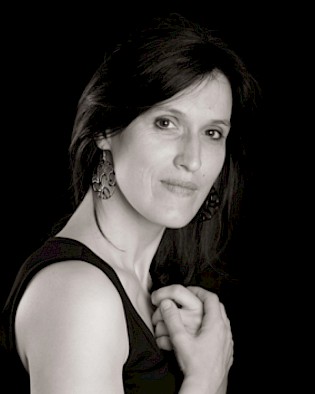
Claire Lefilliâtre
Claire Lefilliâtre is recognised as one of the most gifted specialist interpretators of French and Italian XVIIth century music. She has collaborated with several ensembles including Le Poème Harmonique, The Holland Baroque Society, La Tempête and Les Epopées, with whom she has performed internationally (Opéra-Comique, Opéra d’Avignon, Aix-en-Provence, but also Brusells, Beijing, Delhi). Equally interested by one-off projects, Claire has collaborated with Oxalys Ensemble (Mahler, Canteloube, Berio, Jongen, etc.), Benjamin Lazare, Emily Loizeau, the circus troupe CIRCA and Aurélien Baury. A passionate teacher, she has given many master classes in France and abroad.

Odile Édouard
A professor of Baroque violin since 1996 at the Conservatoire National Supérieur Musique et Danse de Lyon, Odile Edouard is one of the leading figures of the second generation of musicians devoted to performance on historical instruments. Most of her work is dedicated to chamber music, as well as to numerous solo recitals. Committed to ongoing research and self-reflection, she has recently collaborated with Alain Gervreau on his research into the origins of the violin family, culminating in the creation of their new Renaissance violin ensemble, Les Sonadori. She also performed for 20 years with the ensemble Les Witches, with which she explored theatricality and improvisation. She regularly performs with organist and harpsichordist Freddy Eichelberger, as well as with Philippe Despont and Alain Gervreau in their ensemble Les Conversations. She has appeared at most of the major European festivals. Her discography includes more than 50 recordings for labels such as Harmonia Mundi, Alpha, L’Encelade, Ligia Digital, Arcana, L’Empreinte Digitale, Hortus, Sinfonia, and K617.

David Simpson
A graduate of Harvard University in applied mathematics, David Simpson pursued his musical studies at the Juilliard School in New York and at the Paris Conservatoire (CNSM). For nearly fifty years, he has balanced his work as an instrumentalist between contemporary and early music, interspersed with works from the Romantic repertoire, performing with ensembles such as 2e2m, TM+, Itinéraire, Kaleïdocollage, La Chapelle Royale, and Les Arts Florissants, where he has been principal cellist since 1983. In chamber music on period instruments, he is a member of the Atlantis Quartet. He taught baroque cello at the Conservatoire à Rayonnement Régional (CRR) of Paris for nearly thirty years, where he also taught ornamentation and historical temperaments. His numerous recordings, with artists such as countertenor Henri Ledroit and harpsichordist Noëlle Spieth, include cello sonatas by Geminiani and Barrière, cantatas by Handel, Triphon for solo cello by Scelsi, and Pierrot Lunaire by Schoenberg.
Entry requirements
Singing and interpretation class - Claire Lefilliâtre et Stéphane Fuget
Open to all singers, students, pre-professionals and professionals wishing to develop their skills in baroque interpretation. 17th and 18th century vocal repertoire.
Vocal coaching class - Stéphane Fuget
Open to harpsichordists, pianists and theorbists wishing to develop their skills in working with singers on baroque repertoire.
Baroque violin class - Odile Édouard
Open to Baroque or modern violinists—amateurs, professionals, or students in training—with at least an upper-intermediate level (end of the second cycle). In keeping with the aesthetic of the organs on site, two main repertoires will be explored: a program built around two axes—dance music, in preparation for the August 1st ball, and the earliest repertoires composed for the violin (late 16th to early 17th century), in order to make the most of the organ at Saint-Julien-du-Sault (1568). Other repertoire is open.
Cello class and conducting of the continuo on the cello - David Simpson
Open to cellists who have an instrument strung with gut strings. Open to professionals, advanced amateurs, and students with at least an end-of-second-cycle level. All 17th- and 18th-century repertoire for bass instruments may be explored. A significant part of the course will be devoted to the art of accompaniment. Each participant will be expected to accompany the other cellists, with the possibility of also accompanying violinists and singers. Participants should bring a few pieces they have already prepared. A bass violin will also be made available.
Organisation
The days are structured around individual and group lessons, chamber music sessions, and introductory workshops in Baroque dance. The week will conclude with a participants’ concert at the Collegiate Church of Saint-Julien-du-Sault on Thursday, August 6. The first days of the course will focus on preparing for the Ball, with half a day of classes with the dancers and the other half devoted to instrumental instruction.
For instrumentalists
Daily group class focusing on posture, period-specific technical tools, improvisation, and ornamentation (diminution)
Individual lessons
Chamber music sessions
Baroque dance workshop
For singers
Individual lessons alternating with Claire Lefilliâtre and Stéphane Fuget
Chamber music sessions
Baroque dance workshop
The Place
Maison rurale et familiale du Sénonais
24 rue Haute, 89100 Gron

Tarif
Registration fee: €20
Tuition fee: €520
Full-board accommodation: €350
The festival concerts are open free of charge to academy students. Bus trips to concert venues are paid for by the Academy.
I click here to view the presentation file